Basic HTML Version


cartilage. Normal cartilage allows nearly
frictionless and pain-free movement.
When cartilage is damaged, however, joints
become stiff and painful.
During surgery, an orthopaedic surgeon
will remove the worn cartilage from both
sides of the joint. The surgeon will then
replace the joint with an implant, usually
made of metal, plastic or both.
In the case of a knee replacement, for
instance, the damaged ends of the bones
and cartilage are replaced with metal and
plastic surfaces that are shaped to restore
knee movement and function.
During hip surgery, the damaged
ball—at the upper end of the thigh-
bone—is replaced with a metal ball. The
ball is attached to a metal stem that is
fitted into the thighbone. A plastic socket
is implanted into the pelvis to replace the
damaged socket.
“Over the past 30 years, improved sur-
gical techniques and new implant materials
have made joint replacement surgery one of
the most reliable and durable procedures in
any area of medicine,” states Eric Sandefur,
DO, a Saint Alphonsus Medical Group
Orthopaedic Surgeon, Eastern Oregon
Center of Orthopaedics in Baker City.
Recovery
You can usually return to a high level of
activity after joint replacement surgery, but
it takes some time to recover, and you have
to do your part to aid the healing process.
Most patients have some temporary
pain in the replaced joint because the sur-
rounding muscles are weak from inactivity
and the tissues are healing. How much
pain you experience and how long it lasts
depend on the type of surgery and how
well you follow the rehabilitation program
recommended by your doctor.
“Developing bedside therapy services
has been shown to better meet the needs of
patients and improve their outcome, and
new pain management protocols are supe-
rior in ensuring patients’ comfort and safety
during their stay,” says Mark Meier, MD,
Orthopaedic Surgeon, Orthopaedic Associ-
ates in Boise.
Exercise is an important part of the
recovery process. Your surgeon can rec-
ommend an exercise program that best
fits your needs. You may be permitted
to take part in light activities, such as
playing golf or walking. High-impact
and joint-overloading activities—such as
running, heavy lifting or jumping—are
generally discouraged once you have a
joint replaced.
In the future
Depending on your age, you may need
to have a second total joint replacement
procedure performed.
Artificial joints typically last anywhere
from 10 to 25 years. But with advances in
orthopaedic surgery and technology, replace-
ment joints may now last even longer.
Spiro has no regrets after undergoing
ankle replacement. “I recognize there are
certain limitations—I won’t be leaping
over tall buildings, but it’s a trade-off I’m
willing to make because I can now be active
without the pain,” he says.
OSTEOARTHRITIS?
YOU DON’T HAVE
TO LIVE WITH PAIN
Saint Alphonsus Regional
Medical Center is pleased to
announce the latest advance-
ment in our orthopaedic service
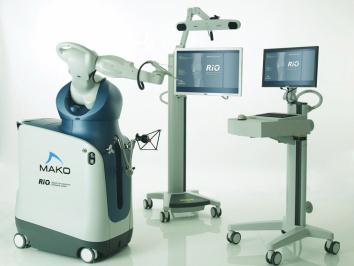
line. The MAKOplasty Robotic
System—the newest addition to
our Robotics Center of Excel-
lence—is a state-of-the-art
treatment option for people
with early- to mid-stage osteo-
arthritis of the knee. Potential
benefits of this minimally inva-
sive partial knee replacement
procedure include:
• More rapid recovery
• Shorter hospital stay
• More natural-feeling knee
And for you, that can mean
relief from pain and getting
back to doing the activities
you love. To determine if you
would be a good candidate
for partial knee replacement
or for more information
about this new option call
(
208
)
367-DOCS
(
3627
).
“FOR MOST PEOPLE, JOINT REPLACEMENT SURGERY
HAS THE POTENTIAL TO MAKE A TREMENDOUS
DIFFERENCE IN THEIR POST-SURGERY QUALITY OF LIFE.”
— John Foote, MD, Orthopaedic Surgeon,
Riverside Orthopaedic Clinic in Ontario
Saint Alphonsus Health System hospitals received numerous five-
star ratings and clinical excellence awards from HealthGrades
®
for joint replacement programs. See details on page 3, or visit
www.saintalphonsus.org.
Health & Healing
www.saintalphonsus.org
9